Southfield Construction

Builders in Burton Latimer

Extensions, renovations, roofing and groundworks across Burton Latimer and the surrounding area.

Builders in Burton Latimer who send the same team, not a franchise

Southfield Construction works in Burton Latimer and the villages around it. It is a small town with an unusual amount of industrial history under it, and that history is the thing worth checking before a foundation is designed. The ground here has been worked, so what is under a plot matters as much as what goes on top of it, and it is a fair thing to ask builders in Burton Latimer about first.

Extensions, renovations, roofing and groundworks across the town. We look after the Building Regulations side of the work, arranging the inspections and seeing the job through to sign off, and you get a price in writing before anything starts.

Discuss your project

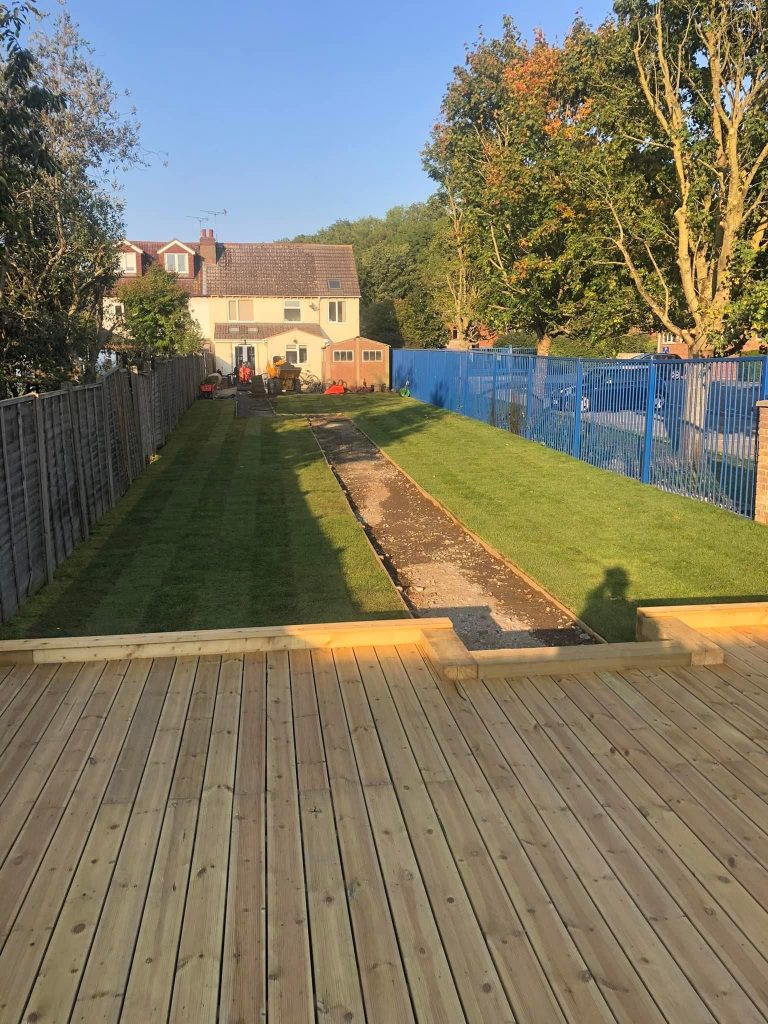
New timber decking in the foreground looking down a long garden of freshly laid striped turf towards a rendered semi-detached house, with a tracked dumper parked by the back door.
Decking and new turf

Why choose Southfield Construction

Four things we commit to on every job, rather than four things we say about ourselves.

We see Building Control through to sign off

Permitted development is not an exemption from Building Regulations. We arrange the North Northamptonshire Council inspections, meet the inspector on site at each stage and see the work through to sign off. We do not make the application itself, and we will tell you what is needed and when.

A price in writing before anything starts

Free, and you get it before you commit to us. Party walls and skip licences are raised at quotation stage, not three weeks into the dig.

One team from first dig to final snag

The same people do the groundworks, the brickwork and the fit out. Nobody hands your job to a subcontractor you have never met.

We will tell you if a job is not right for us

You get a straight answer rather than a padded price. It costs us a job occasionally and saves you a great deal more.

Building on Burton Latimer property

Burton Latimer went from farming village to light industrial town in about fifty years, and then the industry that caused it ran out. Both halves of that matter to a builder.

The town was predominantly agricultural until the mid 1800s. The railway arrived and connected it to London and the industrial midlands, ironstone was found in quantity, and quarrying began around 1872 to the north, with further quarries opening to the west and east. By 1885 the first four clothing factories had opened and by 1898 the first shoe factory, and the place grew rapidly. Then the ironstone ran out and the last iron ore pits closed in 1921.

What that leaves is a town with a small older core, a compressed band of late Victorian and Edwardian industrial era housing, and then a great deal of modern estate development, much of it built out over ground that was quarried and restored a century ago. There is very little of the gradual nineteenth century layering you find in a bigger town, because the growth happened in a short burst.

There is also a continuity worth knowing. A mill is recorded at Domesday in 1086 beside what is now the Weetabix site, and the mill there was acquired in the 1930s and became Weetabix, which is still made in the town.

For most of the housing the construction is conventional and straightforward: cavity walls on the modern stock, solid walls on the industrial era terraces, driveways and side access on the estates. The complications here are almost entirely below ground.

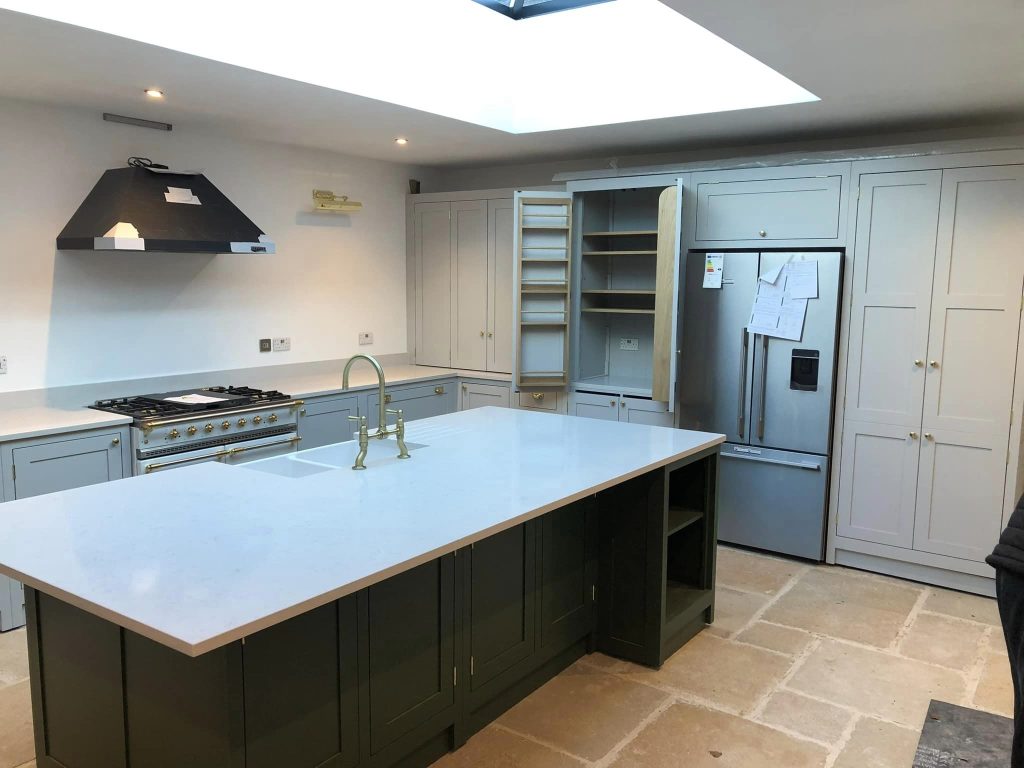
A finished kitchen with pale grey shaker units, a dark green island topped in white quartz, brass tapware, a range cooker and a roof lantern above flagstone flooring.
Kitchen fit out with roof lantern

Where we work around Burton Latimer

  • Isham
  • Finedon
  • Great Harrowden
  • Little Harrowden
  • Cranford
  • Barton Seagrave
  • Pytchley
  • Orlingbury
  • Broughton
  • Warkton

Those are the places we work most often, not the limit of where we go. We cover the town and the surrounding Northamptonshire villages, so if you are not sure whether we reach you, just ask.

Planning authority
North Northamptonshire Council
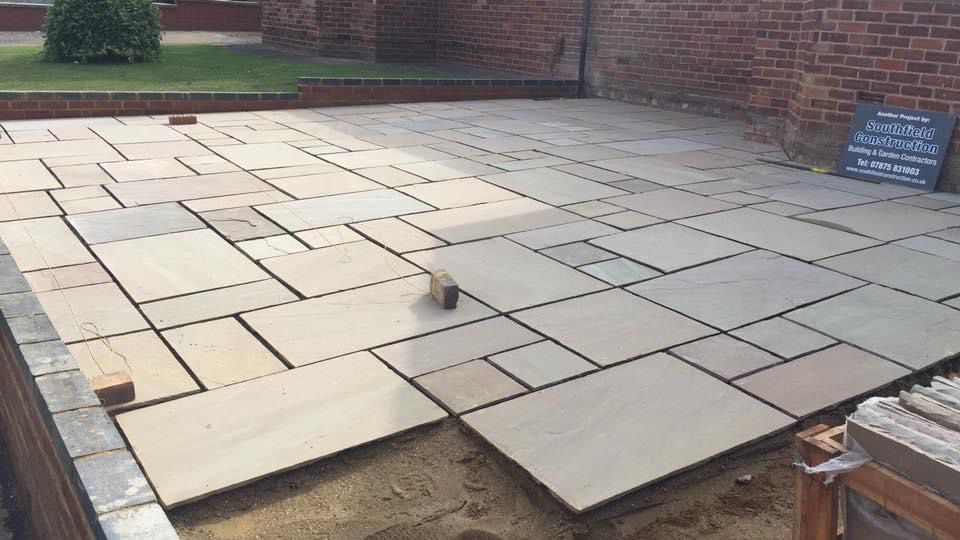
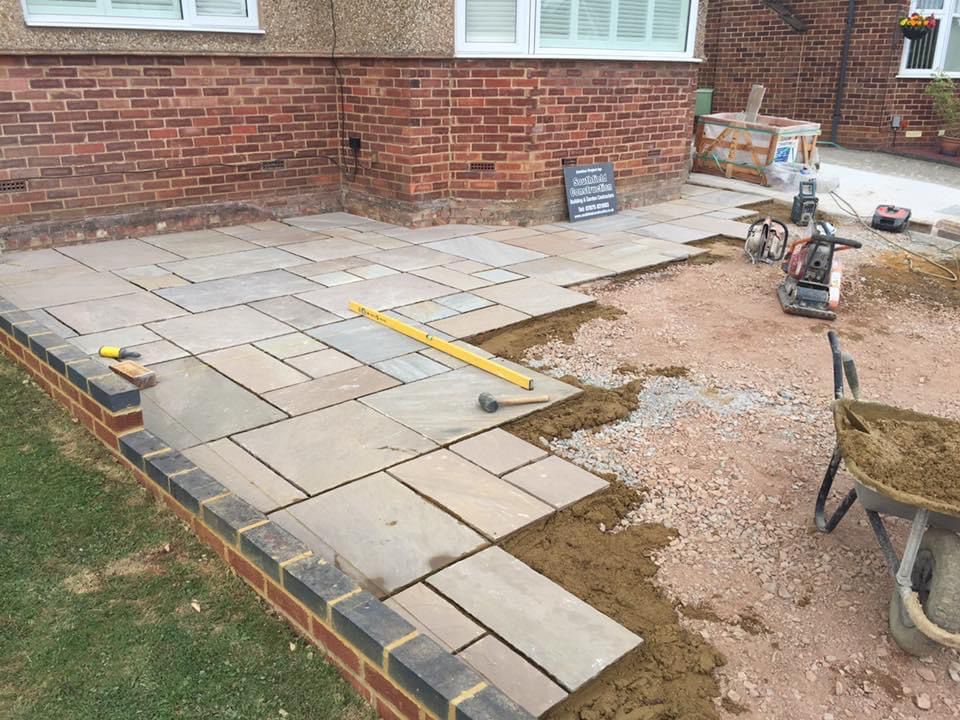
A large Indian sandstone patio laid across a rear garden against a red brick house, edged with a charcoal brick course, with a Southfield Construction site board standing in the corner.

Planning, regulations and practicalities

The answers that genuinely differ from one Burton Latimer street to the next.

Do I need planning permission, and who handles Building Regulations?

North Northamptonshire Council is the local planning authority. It is a unitary council, so planning, building control and the roads all sit with the same authority, which keeps the practical side simpler than in a two-tier district.

Most of the town is undesignated

Because so much of Burton Latimer is modern estate housing, the majority of properties here are neither listed nor in a conservation area, and it is worth saying that plainly rather than implying constraints that do not apply. On that stock a single storey rear extension of up to four metres on a detached house or three on a semi frequently falls within permitted development, there is usually side access, and a skip stands on the drive.

The larger home extension route is also available on unlisted property, allowing up to eight metres on a detached house or six on any other by prior approval rather than full permission, with neighbours notified and an answer in about six weeks.

The older core

Around the historic centre and the church the picture is different, with older buildings, tighter plots and designations that need checking before anything is drawn. The same applies in the surrounding villages.

What the council will want to see

Where a site has a history of quarrying or industrial use, ground conditions can become a matter for the application rather than only for the builder. That is normal and manageable, and it is far better established at the outset than raised late.

Permitted development is not an exemption from Building Regulations, and a full plans application is still required. We do not make that application, but we arrange and meet the inspections that follow it and we see the work through to sign off.

Where does the skip go, and who applies for the licence?

One council for the roads as well

North Northamptonshire is unitary, so the council that decides your planning application is also the highway authority. A skip standing on a public road in Burton Latimer is licensed by that same council, applied for by the skip company rather than by you or by us, and it needs to be in before the skip is due.

Access is mostly straightforward

On the estate housing that makes up most of the town there is a driveway and side access, so a skip stands on your own ground, no licence is needed, and a machine can reach the back garden. That takes genuine cost out of a job compared with a terraced street elsewhere and we price accordingly rather than applying a standard rate.

Spoil behaves differently on restored ground

Where an excavation goes into old quarry backfill, what comes out is frequently a mixture of overburden, clay and stone rather than uniform subsoil. It bulks up, it does not compact back into the hole it came from, and there can be more of it than a standard allowance assumes. We work the muck away volumes out from the trial hole rather than from a rate.

Indian sandstone patio being laid against a red brick house, edged with a charcoal brick course, with a spirit level checking the falls and a Southfield Construction site board behind.
Next step

Get a written price for your building project in Burton Latimer

Send photographs and a rough brief, or call and talk it through. We will tell you if a job is not right for us.

Call or text
07875 831003
Email
info@southfieldconstruction.co.uk

Southfield Construction (Rugby) Ltd, registered in England and Wales, company 14209138.